
Lower Paxton Previous Residents Sources
A house history moves backward through several records, each with a different date range and purpose. The Recorder identifies parties to a conveyance. An annual directory may print an address occupant, but its scope must be checked for the particular volume. Census schedules are released on a 72-year schedule and can show a household, not just an owner. Estate and obituary material may help close a family trail after a death. No one source proves every person who lived at an address.
| Source | Years it covers | Where held | What it can show |
|---|---|---|---|
| Deeds and miscellaneous documents | 1785 to present | Dauphin Recorder Acclaim and Recorder counter | Grantors, grantees, UPI, legal description, and record date |
| Mortgages | 1979 to present | Dauphin Recorder | Recorded mortgage relationship and date |
| Harrisburg directories | Selected runs from 1839 to 1999 | HSDC and DCLS East Shore microfilm | Printed name, address, usually occupation, and some street sections |
| Federal census | Released on the 72-year schedule | Federal and library research channels | Household composition for the enumeration date |
| Estate and marriage material | Estates late 1700s onward; marriage 1885 onward | Dauphin Register of Wills and Orphans' Court | Decedent, representative, heir, and marriage context |
The Dauphin County Recorder of Deeds is the first official source for the recorded ownership trail. The image below shows its office source. Use the portal for an index search, then use the office when a specific document, copy, or certificate needs confirmation.
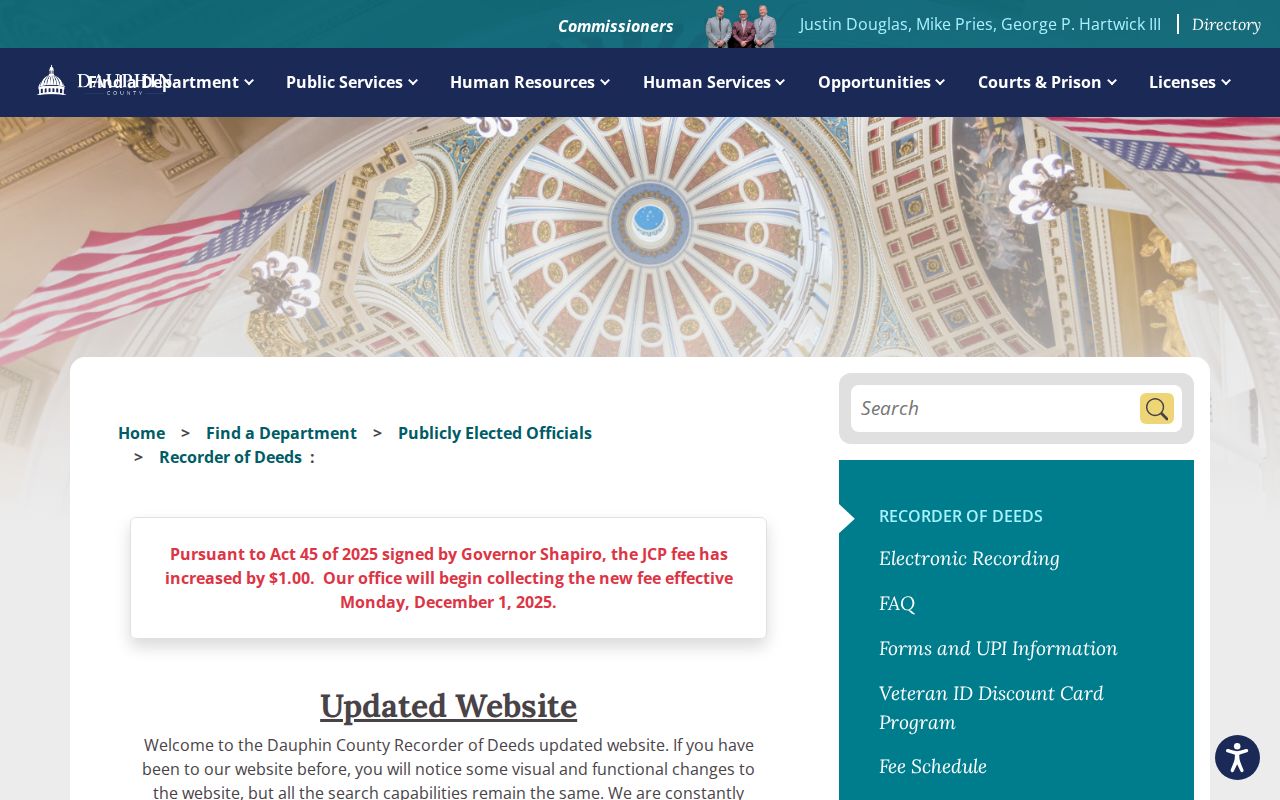
Its stated deed and miscellaneous-document coverage begins in 1785, the year Dauphin County formed. That unusually long online index makes the recorded parcel history a practical backbone, while directory and household sources add the people an ownership record cannot name.
Start a Lower Paxton Previous Residents Trail
Begin with the current parcel, not a bare street address. In Dauphin County Property Tax Inquiry, search by parcel number when known. Otherwise use the last owner name as printed on the tax bill, or use house number and street name without a directional or suffix. The county portal can return the current owner, mailing address, situs address, Property ID, assessment data, and a deed reference. Record those facts exactly as displayed before moving to the Recorder.
The property address is the physical situs. The mailing address is where tax correspondence goes, which can be somewhere else. The county's Property ID remains tied to the location even when ownership changes, and the Recorder uses the related UPI or parcel-number concept. That distinction keeps an address search from turning an owner's mailing information into a claim about who lived at the house.
The County's Tax Claim Bureau information is pictured below because it is another official property-record channel. Delinquent-tax or sale material may give a date and parcel context, but it does not establish possession, household membership, or clear title.
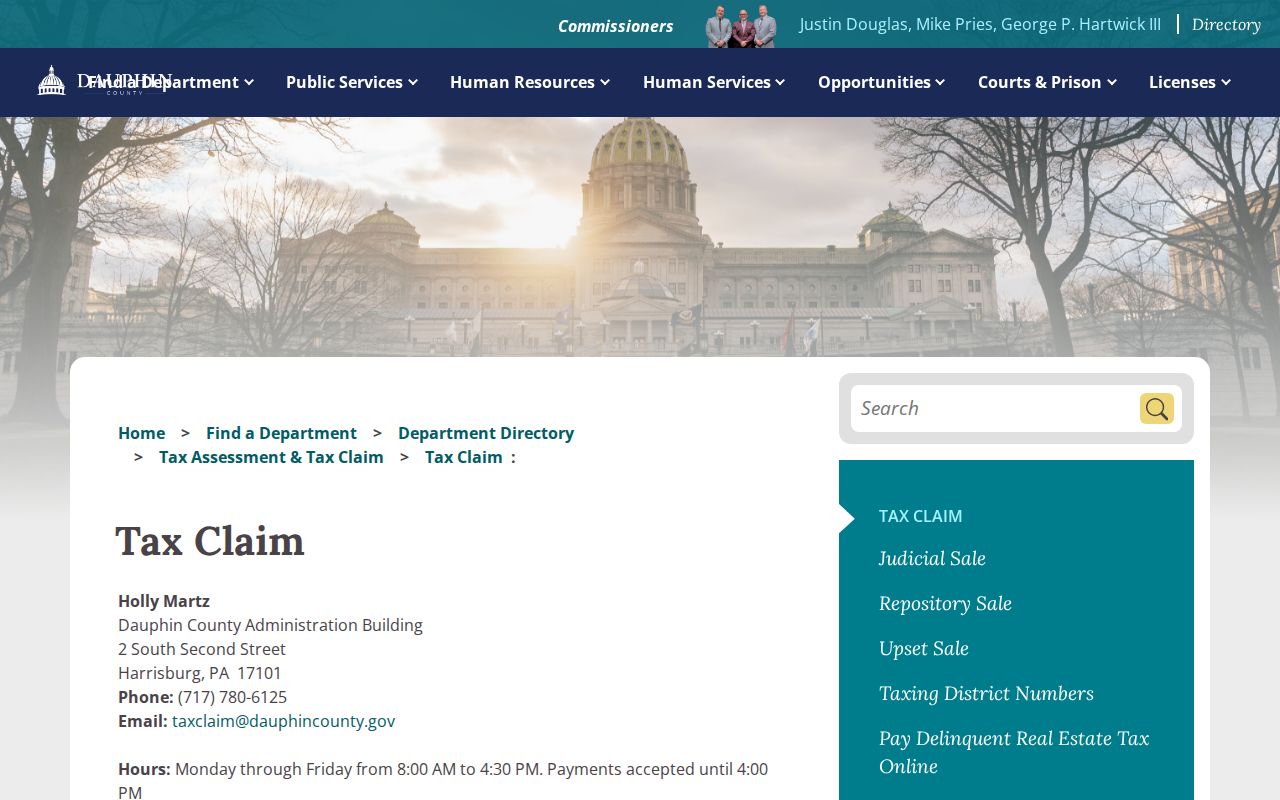
For the full street-by-street current-record method, use the Lower Paxton Township street address directory. A prior-resident search stays focused on one parcel's backward trail instead of trying to list everyone on a road.
Trace Lower Paxton Previous Residents Deeds
The deed chain connects a current parcel to earlier recorded owners. Acclaim has Name, Instrument Number, Document Type, Book/Page, Record Date, Consideration, UPI Number, and Municipality/Comments modes. Address is not its central documented chain field. Use the UPI, legal description, and prior recording details to keep a common surname from pulling in the wrong parcel. A deed records a conveyance, not the precise date a family moved in or out.
- Take the current Property ID, deed reference, owner, situs address, and legal description from Property Tax Inquiry.
- Search Recorder Acclaim by UPI or the most recent recorded party, then save the instrument number or book and page, date, grantor, grantee, and document type.
- Search the seller, ordinarily the grantor on that deed, as a grantee in an earlier transaction while comparing the UPI, legal description, lot, block, or subdivision.
- Repeat one conveyance at a time and inspect recorded plans, easements, covenants, or restrictions when the parcel is part of a subdivision.
- Cross-check a transition against an assessment sale entry and a dated directory or census result. Keep any uncertainty in the research log.
- Grantor and grantee
- The grantor is the party conveying an interest. The grantee is the party receiving that recorded interest.
- Chain of title
- The ordered series of recorded transfers or interests connected to the same real estate.
- Legal description
- The recorded description of land, such as lot, block, plan, or metes and bounds. It can remain useful when a street address changes.
Lower Paxton UPI Connects Old Records
The UPI is the practical bridge across the assessment record, tax map, and Recorder index. Dauphin County identifies the Property ID as the location on the tax map, and the Recorder describes UPI, PIN, or parcel number as the same identifying idea. County notice says every real-estate document filed on or after May 1, 2009 must show a certified parcel number on its front page. A street name is useful for finding the parcel, but the UPI and legal description are stronger anchors once the historical search begins.
For an ambiguous plan, image, or recording issue, the Recorder remains the official source at 101 Market Street, Room 102, Harrisburg, with weekday counter hours listed as 8:00 a.m. to 4:30 p.m. Call 717-780-6560 before traveling. The online system is broad, but the research does not claim that every historic image has identical online presentation.
Pair Lower Paxton Directories and Census
Owners are only one part of the past-residents question. The Historical Society of Dauphin County lists Harrisburg city directories from selected years beginning in 1839 and continuing through 1999, while DCLS East Shore Area Library has Harrisburg directory microfilm for 1861 through 1901. A directory generally prints a resident or business name, address, and usually occupation. Some volumes have a street-number or reverse section that can turn an address into a starting point, but the particular volume must be checked for that feature and for Lower Paxton coverage.
- Test the street or reverse section for the target year, then search the alphabetical entries for surname variants.
- Copy the printed address, occupation or business, and any spouse or widow notation with the volume year and page.
- Compare adjacent directory years for an address change, disappearance, or altered spelling.
- Pair the closest released federal census with the dated directory to test household composition at that time.
- Use a deed, obituary, or estate record to distinguish an owner, occupant, relative, or personal representative.
The Lower Paxton Township city directory collections page has the collection detail. A negative in a Harrisburg-titled volume is not a negative for Lower Paxton: the Historical Society cautions that nearby-town coverage is volume specific, and township residents often used Harrisburg as a mailing city.
Lower Paxton Previous Residents Before 1785
Jurisdiction is part of the historical address. Paxton Township began in 1729 within Lancaster County. The remaining township was renamed Lower Paxton in 1767, and Dauphin County was established in 1785. A family or land question before 1785 should therefore begin with Lancaster County and Paxton records, not with an assumption that a modern Dauphin search covers the earlier period. The Recorder's 1785 starting coverage aligns with the county's founding era.
Linglestown was created in 1765 as the Town of St. Thomas and later took the Lingle's town or Linglestown name after Thomas Lingle died in 1811. For the colonial and early nineteenth-century period, church, cemetery, deed, and Historical Society sources can be stronger than a directory. Later, a farm legal description may precede a subdivision plan and a modern street number, while an older printed address may use Harrisburg.
Link Lower Paxton Past Residents to Estates
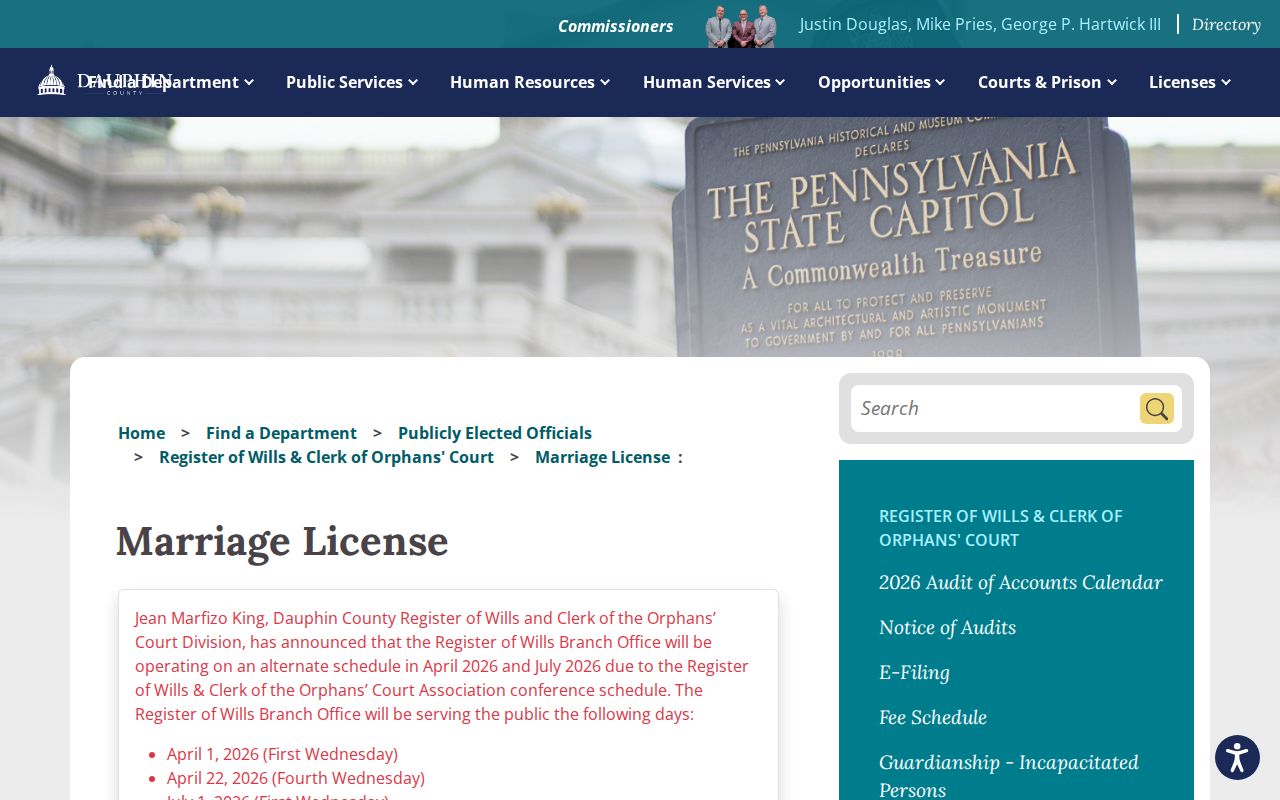
A directory address can become an heir trail only after it is compared with public estate and recorded-transfer material. The Dauphin marriage-license record source is shown below. The Register also holds estate and Orphans' Court records reaching the late 1700s, marriage licenses from 1885 forward, and local births and deaths for 1893 through 1906. A representative or heir named in an estate file is not automatically the occupant of a former address.
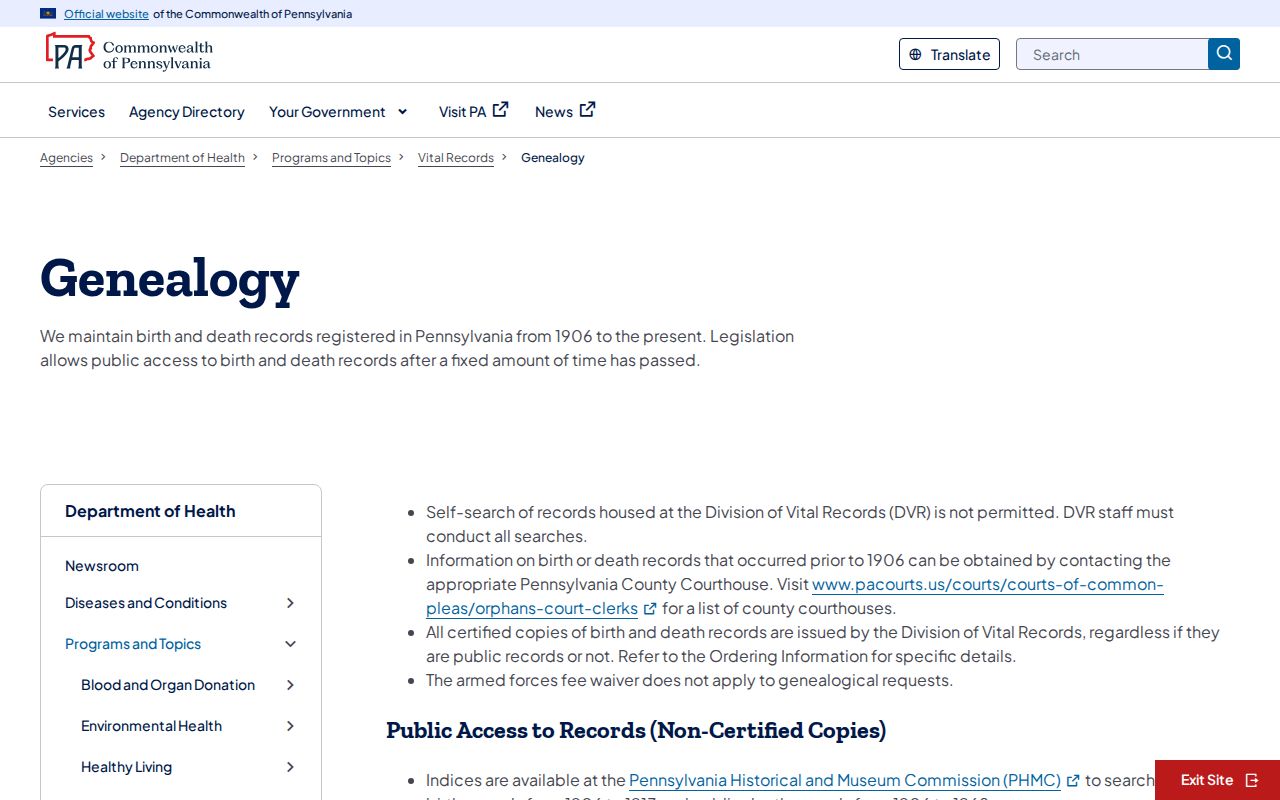
For mature historical vital records, the Pennsylvania vital-record genealogy access is another documented route. Birth records become public after 105 years and death records after 50 years. The State Archives asks for a name, date, and certificate number, so find the index citation before ordering. This official genealogy source is pictured next.
The Pennsylvania historical birth and death certificate-request route gives another access channel after the index work is complete. It is useful to understand the documented request path, but eligibility and the custodian's current instructions control what can be ordered.
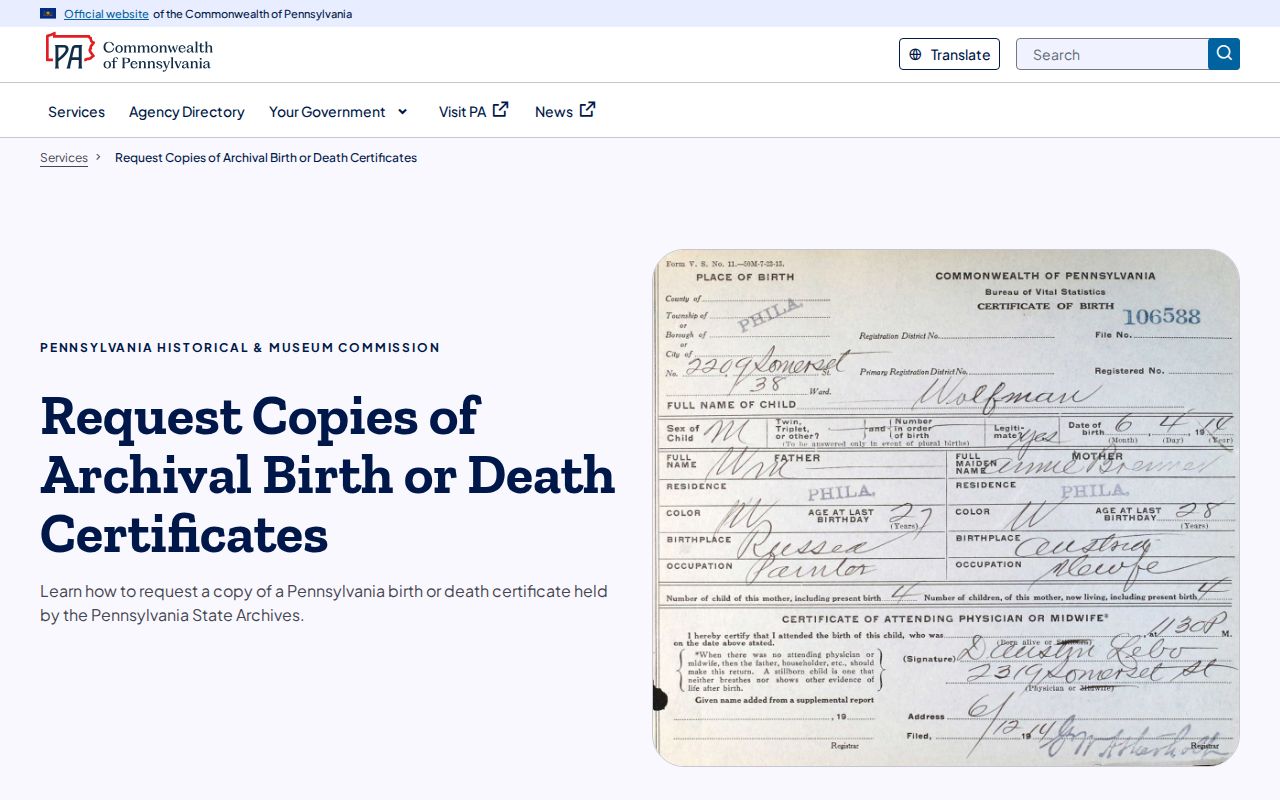
For a family-history question, combine a dated directory entry with an obituary, a public estate docket, and a later deed transfer. Each source has a role. That is more reliable than treating an old printed name as a current contact detail.
Lower Paxton Previous Residents Privacy Limits
Past-resident research is best used for house history, family history, estate questions, and local history. It must not be treated as a way to locate or pressure a living person. Assessment owners, deed parties, directory occupants, and census household members are different roles. The Pennsylvania Address Confidentiality Program can also substitute an address in listed government records for eligible participants, and public records may be redacted or restricted.
Pennsylvania's Right-to-Know Law is not a demand for an agency to create a compiled resident list. Ask for an existing identifiable record and accept lawful redactions. Pennsylvania law separately addresses stalking at 18 Pa.C.S. § 2709.1 and harassment at 18 Pa.C.S. § 2709. Using a historic record to follow, intimidate, or harm someone is not a lawful house-history purpose.