
Finding Lower Paxton Township Residents
Lower Paxton Township has no single official household roll. The useful trail depends on the question. An address normally starts with Dauphin County assessment data, which can identify the current owner of record, the property address, a mailing address, a deed reference, and the county Property ID. A name tied to an older home may be better served by a deed, a printed directory, an estate record, or a newspaper notice. Each source records a role, not a universal fact about everyone connected with the address.
Keep the roles separate. An assessment result identifies a recorded owner, and its mailing address can differ from the physical property address. A deed records grantors and grantees. A directory may place a person at a printed address during one publication year. This is the central myth to avoid in Lower Paxton Township resident research: those roles are not interchangeable, and none alone proves a full household.
- Search the county property record by address, owner name, or parcel number and write down the Property ID and deed reference.
- Use the Property ID or party names in the Recorder index to test the recorded property relationship.
- For a public court matter, search the Pennsylvania UJS system with Dauphin County selected and retain the docket number and party role.
- For an earlier household, check a directory volume and then compare it with released census, obituary, deed, or estate evidence.
- When the needed township file is not online, request the existing record through the Lower Paxton Right-to-Know process.
Note: A matching name is only a lead until independent records agree on role, place, and time.
Lower Paxton Township Resident Records Offices
Most core Lower Paxton Township resident records are held in Dauphin County offices in Harrisburg, not at a township clerk counter. The Recorder connects people to recorded real-estate instruments. Tax Assessment maintains the current parcel record. The Register of Wills and Clerk of the Orphans' Court holds estate, marriage, guardianship, and older local vital material. Township government is the practical route for permits, planning records, agenda material, and files that may require a precise public-records request. For a street-by-street property chain, use the Lower Paxton Township By Street directory.
Dauphin County Recorder of Deeds
101 Market Street, Room 102
Harrisburg, Pennsylvania
717-780-6560
Dauphin County Tax Assessment
Administration Building, 2 South Second Street
Harrisburg, Pennsylvania
717-780-6101
Dauphin County Registration and Elections
1251 South 28th Street
Harrisburg, PA 17111
717-780-6360
Lower Paxton Township Property Record Fields
Dauphin County Property Tax Inquiry is the most direct current-property route for a Lower Paxton Township address. The portal requires at least one criterion. Parcel number is the county's preferred starting point, with or without dashes. When that number is not known, the help directs users to enter the tax-bill surname or only the house number and street name, without a directional or suffix. The municipality filter can narrow a broad result to Lower Paxton Township.
| Property Inquiry field | How it narrows a Lower Paxton result | Important limit |
|---|---|---|
| Parcel Number | Searches the county parcel identifier | Best bridge to deed and map work |
| Owner Name | Tests a current owner of record | Does not identify every occupant |
| House Number and Street Name | Finds a particular address or street segment | Street entry omits directional and suffix |
| Townships/Municipalities | Limits results to Lower Paxton Township | Useful when postal city labels overlap |
| Sales and physical filters | Offers date, price, neighborhood, building, and class criteria | Confirm a transfer against the recorded deed |
The Property Tax Inquiry capture shows the county search interface used to begin a Lower Paxton Township residents directory trail.
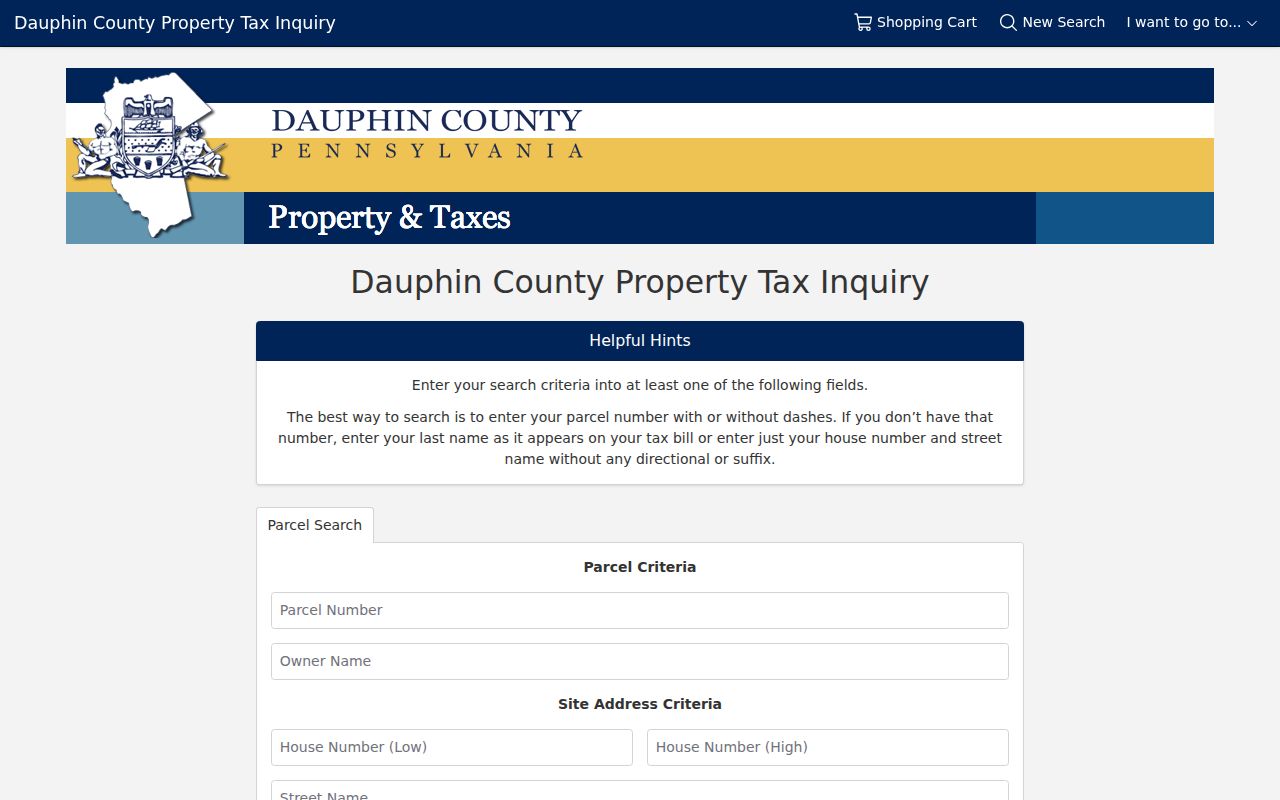
Its results should be read as property and owner evidence, then checked against the Recorder when the question is about a recorded transfer.
Lower Paxton Township Resident Records by UPI
A UPI, also called a Property ID, PIN, or parcel number, is the durable bridge between Lower Paxton Township assessment, map, and deed records. The county says its Property ID identifies the location on the tax map and stays with the property even when ownership changes. The Recorder's search uses UPI Number as a mode, and the county requires a certified parcel number on real-estate documents recorded after May 2009. That makes the UPI stronger than a mailing-city label when an address has changed or a road is described differently in an old record.
- Parcel or UPI
- The county identifier for the mapped real-estate unit.
- Situs address
- The physical property address, distinct from the owner's correspondence address.
- Index
- A search tool that points to a record, not the official record by itself.
- Criss-cross directory
- A directory section arranged by street number when a particular volume includes one.
For a Lower Paxton Township residents directory search by address, record the UPI before opening the deed index. The address is a useful locator, but the legal description and parcel number are the better safeguards against same-street and same-name confusion.
Note: A GIS boundary is reference mapping, so confirm ownership through live assessment and recorded documents.
Lower Paxton Township Resident Deed Trails
The Dauphin County Recorder Acclaim index offers Simple Search, Name, Instrument Number, document type, Book/Page, record date, consideration, UPI Number, municipality/comments, and Alpha Index routes. Its stated web coverage is deeds and miscellaneous documents from 1785 to the present, with mortgages from 1979 to the present. The official record remains at the Recorder's counter, so an index result should be treated as a retrieval path rather than a final conclusion.
Start with the UPI from Property Tax Inquiry. Inspect the most recent deed for grantor, grantee, recording date, instrument number, book or page, and legal description. Then search the former owner as an earlier grantee while comparing the legal description, lot, block, subdivision, and recording details. The county cautions against treating sale information as a move date. A deed traces a conveyance, not the day someone arrived or left.
Recorder name search includes party-type and name-matching controls, plus date ranges. Document type can narrow a first pass to a deed, but corrected deeds, deed easements, plans, and related legacy categories may need their own review. The Recorder's Record Notification Service can also alert a property owner when a document is recorded against a property, name, or parcel number. That service is a prompt to examine a record, not proof that a recording is valid.
Lower Paxton Township Current Resident Directories
Current directory-style sources in Lower Paxton Township do different jobs. The property system is useful for an owner of record. The Recorder is useful for a party to a recorded instrument. The state voter status tool is for an individual's own registration check, while formal voter lists have statutory access and use conditions. Court and Register records can confirm a public filing context. None should be recast as a complete resident roll.
| Lower Paxton source | What it can place | Custodian | Access boundary |
|---|---|---|---|
| Property Tax Inquiry | Current owner, property address, mailing address, and UPI | Dauphin Tax Assessment | Public portal and counter |
| Recorder Acclaim | Recorded parties, instruments, and legal descriptions | Dauphin Recorder | Public search; office is official source |
| Voter status tool | One person's registration status | Pennsylvania and County Elections | Individual verification, not street browsing |
| Register public search | Public estate, marriage, and Orphans' Court context | Dauphin Register of Wills | Registered search/view; download terms apply |
| SmartGov and agendas | Public project, permit, notice, or meeting context | Lower Paxton Township | Availability varies by record |
When the goal changes from an address to one identified person, use a narrower cross-checking approach. Keep property ownership, court participation, and a directory listing as separate facts until records support a connection.
Note: A formal voter-list request follows a different access path from an individual's registration-status check.
Lower Paxton Township Resident Court Records
Pennsylvania UJS Case Search gives free public access to docket sheets for appellate courts, Criminal Courts of Common Pleas, Magisterial District Courts, and Philadelphia Municipal Court. For a Lower Paxton Township matter, choose Dauphin County rather than relying on a Harrisburg mailing-city description. Party name, date, docket number, court, and case status can help distinguish people with similar names. The civil route is separate through Dauphin County civil case search.
The civil case-search capture documents a separate portal with date-range, category, judgment, participant-category, contact-address, attorney-name, and sorting options.
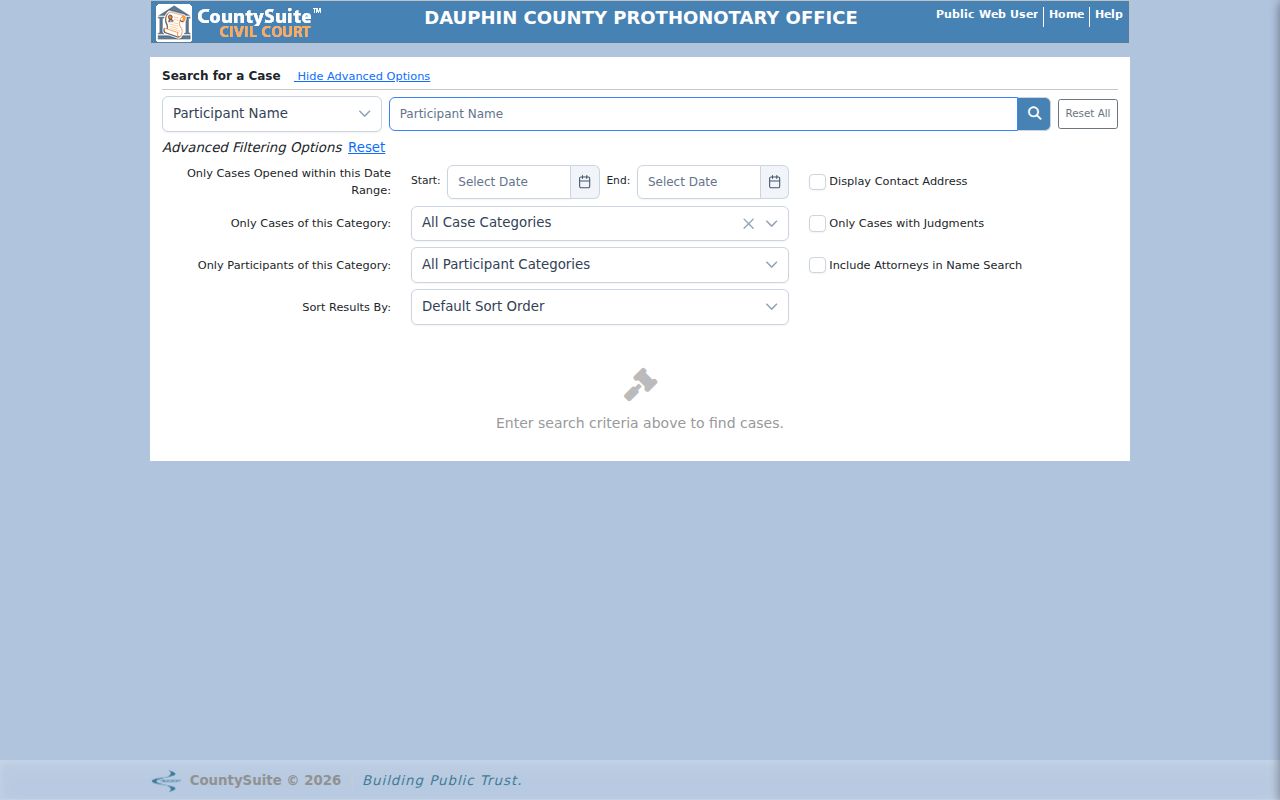
A docket can establish that a public case entry exists, not that a participant currently lives at a displayed address. Juvenile, expunged, limited-access, and some other matters may not appear, so a no-result is not proof that no case existed.
The UJS Case Search capture shows the public case-search route for a Lower Paxton Township records check.
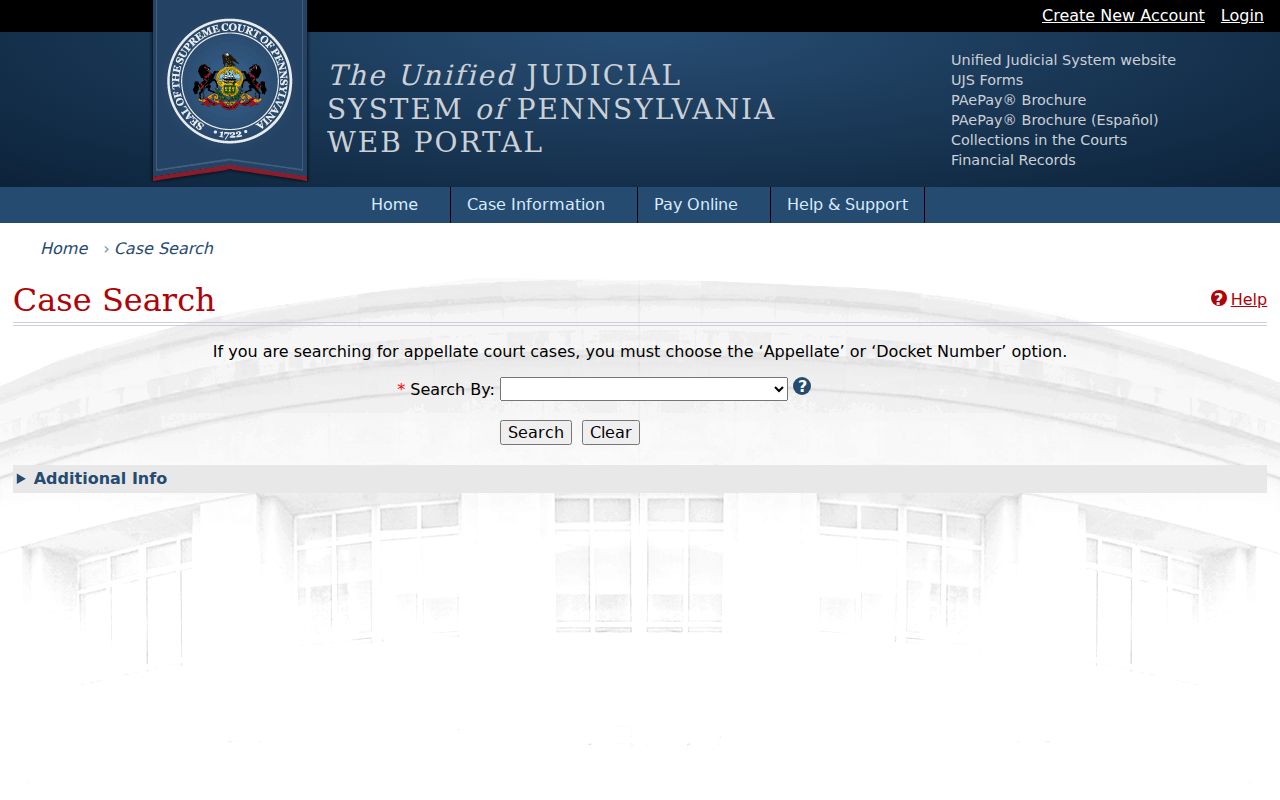
When a certified record or underlying filing is needed, first identify the docket and court, then contact the correct filing office.
Lower Paxton Township Resident Estate Records
Dauphin Register public search provides a different kind of Lower Paxton Township resident trail. The Register of Wills and Clerk of the Orphans' Court reports marriage records from 1885 forward, estate and Orphans' Court material from the late 1700s, inheritance-tax dockets from 1917, and county birth and death records from 1893 to 1906. A registered account can search and view records without charge; the research records a per-page download charge plus a transaction charge, with a monthly subscription option for document printing.
The Register public-search capture is the starting screen for estate, marriage, and historical county-record research.
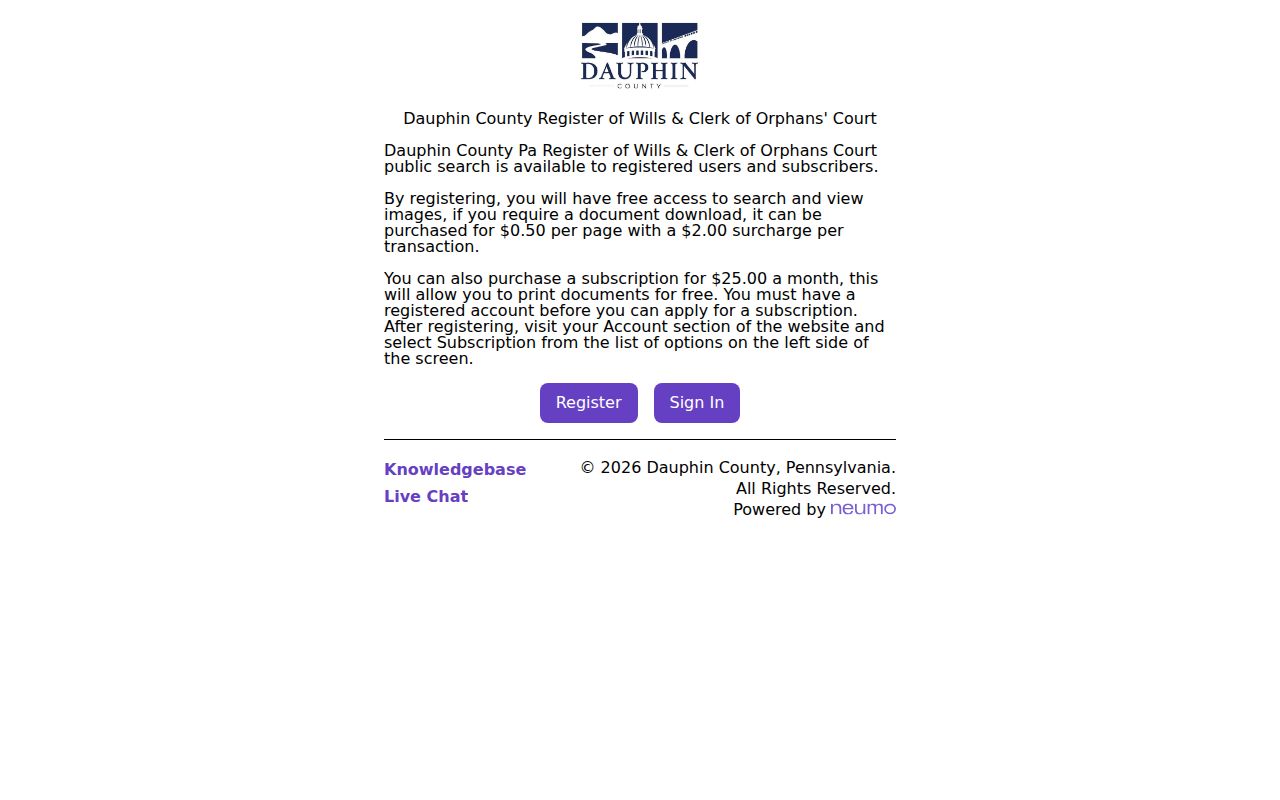
An estate file can identify a decedent, personal representative, heir, guardian, or court record. It does not turn every named person into a current resident.
Note: Record roles matter most where a family name appears in several generations or filings.
Lower Paxton Township Resident Voter Records
Pennsylvania's voter status tool is an individual check. It requires first name, last name, date of birth, and county, with Dauphin selected for a Lower Paxton Township registrant. The state also directs people to County Elections or 1-877-VOTESPA. It is not a browser for every name on a street.
Public voter information follows a separate formal route. Pennsylvania recognizes public-information, street, walking, and full-export list products, but the Department's form includes an attestation and statutory limits on use. The state describes electronic lists and a full export cost for one county or all counties. A county public-information request also requires identification and a written purpose or use statement. Do not publish or recast voter material as a general people directory.
The voter status capture illustrates the individual verification route rather than a Lower Paxton Township residents directory by street.
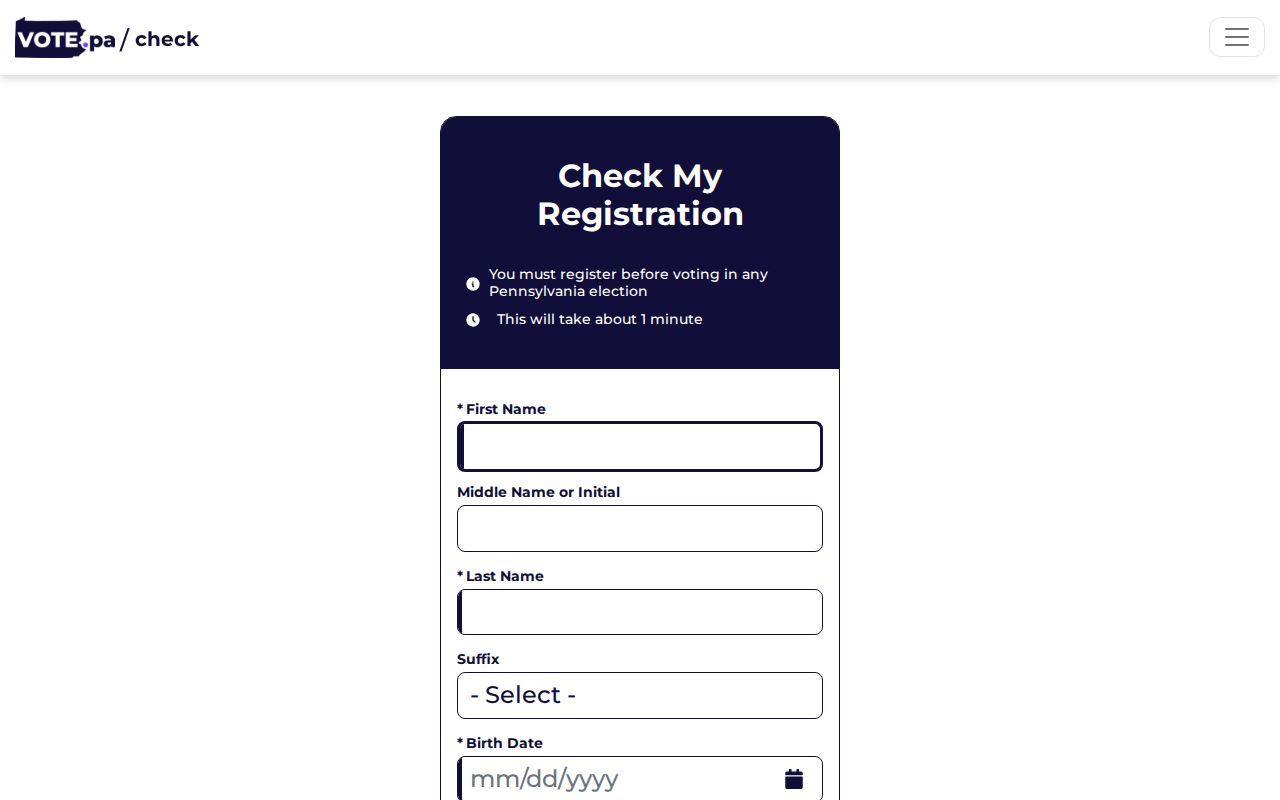
Registration can change when a voter moves or updates a name, address, or party, so a non-match or status result needs cautious reading.
Lower Paxton Township Historical Resident Directories
Historical Lower Paxton Township resident research often begins under a Harrisburg directory title. That title is not a promise that every annual volume covers the township. The Historical Society of Dauphin County lists Harrisburg directory runs from 1839 through 1999 with gaps, while the East Shore Area Library at Colonial Park keeps Harrisburg City Directories from 1861 through 1901 on microfilm. Check the volume introduction for suburbs and nearby-town coverage before treating a missing entry as a negative result.
Directory entries normally give a name, address, and usually an occupation. Some volumes include a street-number section, also called a reverse or criss-cross directory, which can turn an address into a possible printed occupant for that year. Pair the entry with a deed, released census, obituary, or estate record. The deeper shelf, volume years, and household-tracing method belong on the Lower Paxton Township city directories page.
Lower Paxton Township Resident Postal Labels
A Harrisburg postal label is not the same thing as City of Harrisburg. Lower Paxton Township is served across ZIP codes 17036, 17109, 17110, 17111, and 17112, and several of those ZIPs cross municipal boundaries. The County Property Inquiry municipality filter and the UPI are better tests of township location than the postal city alone. This matters in the residents directory because the same mailing label can cover Lower Paxton and nearby municipalities.
USPS ZIP Lookup is useful for standardizing a known address, but USPS says its result does not confirm a person or company is actually at that address. For property work, normalize the address, confirm Lower Paxton Township in the county system, and then use the parcel number or legal description for the deed trail.
Note: A postal city helps deliver mail, while the county municipality field identifies the local government area.
Lower Paxton Township Resident Records Offline
Lower Paxton SmartGov is the public entry point for permits, inspections, licenses, notices, parcel search, reports, documents, and requests for information or concerns. Its landing page does not promise a complete historical permit grid. For a particular address, identify the parcel or address, record type, and date range, then use the portal or Community Development to ask for the underlying file. The Agenda Center is another public route for applicants, projects, and approved meeting minutes.
The SmartGov capture shows the public municipal portal available for Lower Paxton Township record requests.
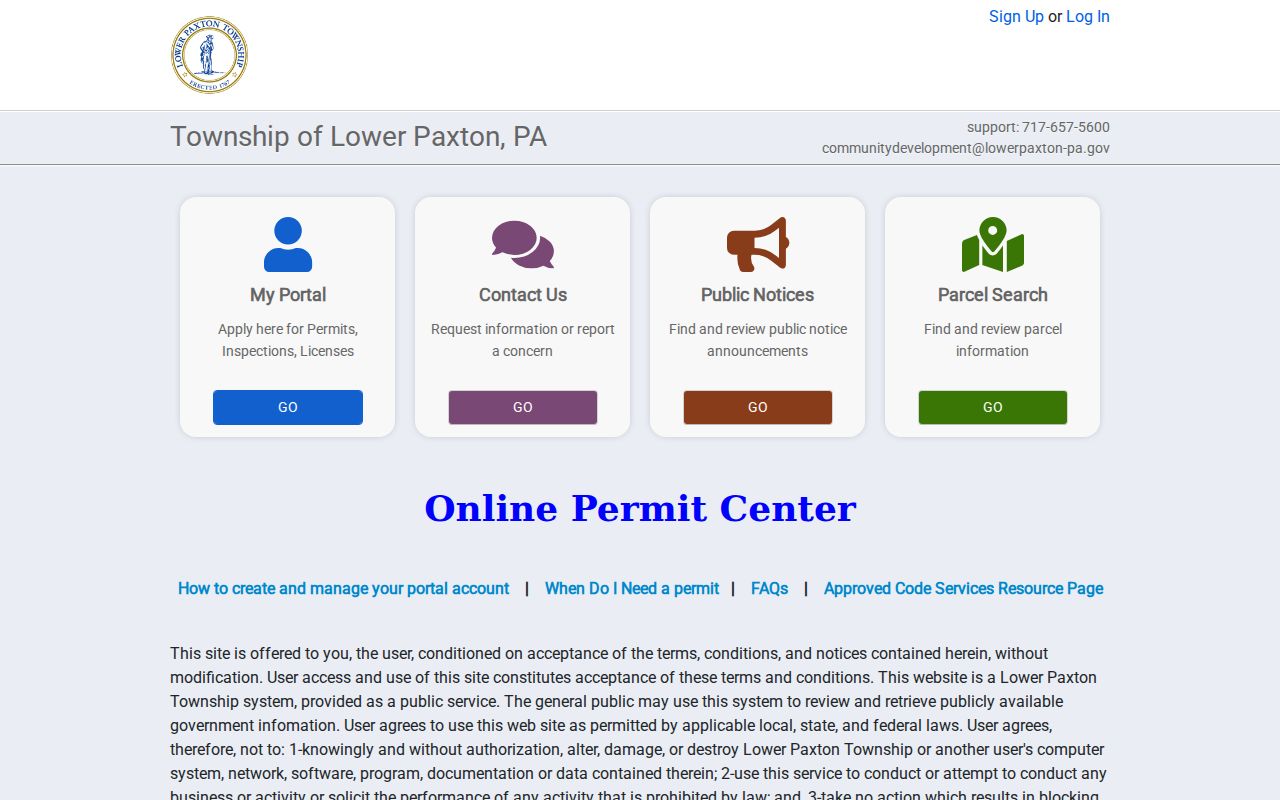
Municipal permit and agenda material can add project context to an address, but it is not a current household list.
When an identifiable non-exempt record is not available online, use the Lower Paxton Right-to-Know request route. The Township policy names the Open Records Officer, accepts sufficiently specific written requests, provides a normal five-business-day response period, and publishes copy, certification, material, and postage charges. It does not require the Township to create a new resident list or reorganize data into a requested format.
The Right-to-Know capture documents the local fallback channel when a municipal record is not visible online.
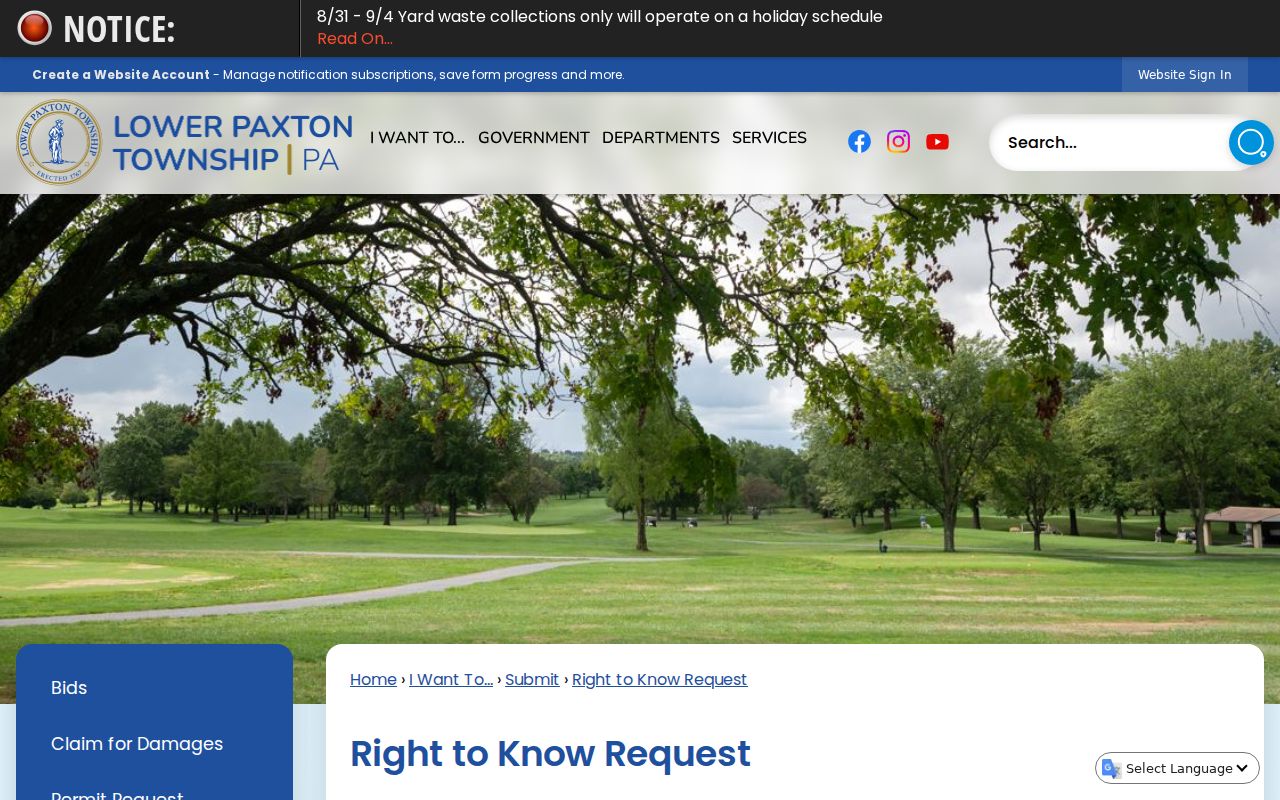
Ask for existing records by address, subject, and date range rather than asking an agency to answer who lives somewhere.
Lower Paxton Township Resident Name Checks
Additional state records can support a narrow Lower Paxton Township resident question when used for their actual scope. The Department of State Business Entity Search uses an exact entity name or file number, not an officer name or address search. The Pennsylvania Licensing System, known as PALS, supports person, facility, disciplinary, and provider searches but does not establish a personal residence. Treasury unclaimed property is a name-based claim lead, not proof of identity or address.
The PALS capture shows Pennsylvania's official licensing search landing page.
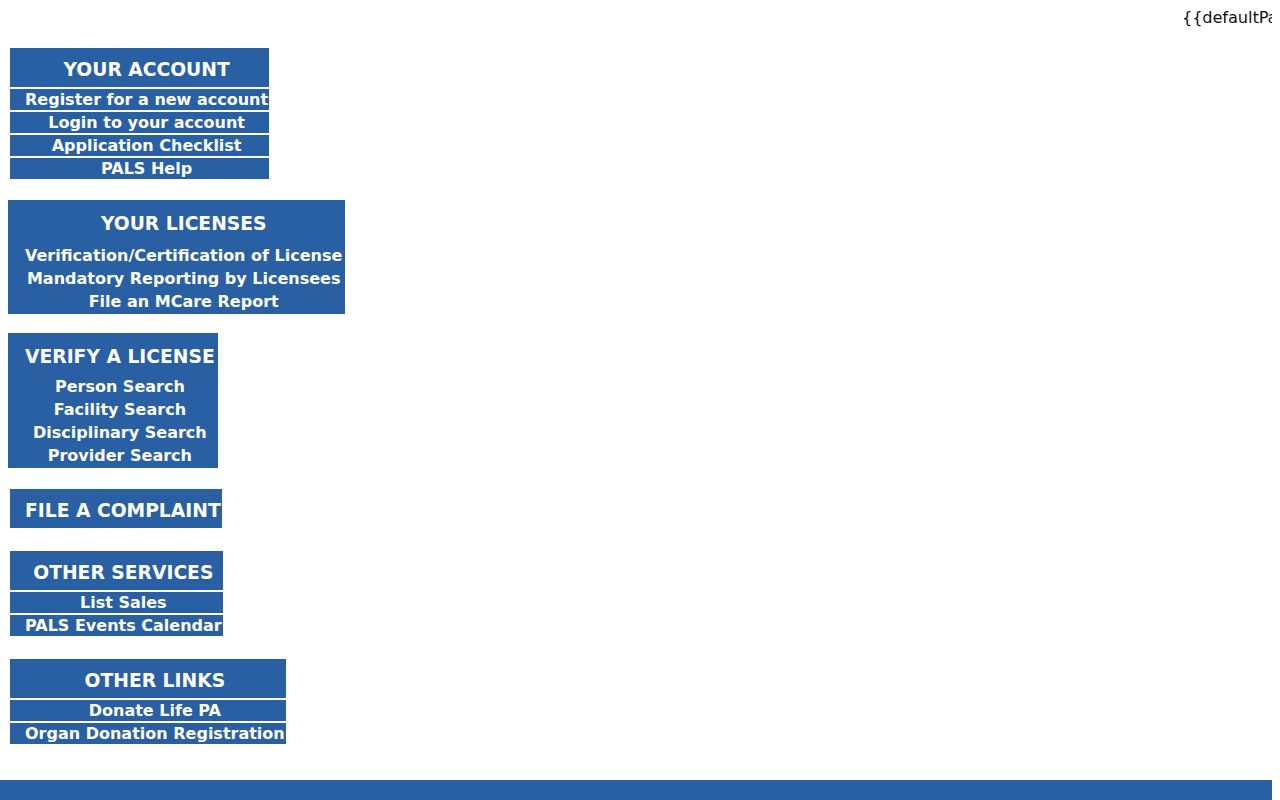
A responsible check compares independent identifiers such as name spelling, middle initial, date range, court number, entity file number, or parcel number before connecting records.
| Official record route | Useful strength | Read it carefully |
|---|---|---|
| County assessment and Recorder files | Named custodian and defined property role | Owner or party is not automatically an occupant |
| Court, Register, and archive records | Docket, estate, or historical context | Access limits and same-name issues remain |
| Commercial people-finder category | May offer a broad lead | Refresh cycles, duplicates, and wrong-person matches need official confirmation |
Note: Independent identifiers reduce same-name errors without converting a public record lead into a residency claim.
Lower Paxton Township Resident Privacy Boundaries
Pennsylvania access is source-specific. Deed and assessment records can be open while birth material, driver data, adoption files, juvenile matters, protected voter information, and some court records have restrictions. The Pennsylvania Right-to-Know Law, Act 3 of 2008, 65 P.S. §§ 67.101-67.3104, presumes agency records are public subject to exemptions, privileges, other laws, and court orders. A request should seek an existing, identifiable record and allow for lawful redaction.
The Pennsylvania Address Confidentiality Program offers eligible survivors a substitute mailing address for specified records, including voter registration and some government records. It is administered through the Office of Victim Advocate and is a safety-plan service, not witness protection. A missing or substituted address is not proof that a person lacks an address. Vital records have separate access periods: birth records mature after 105 years and death records after 50 years under the Vital Statistics Law of 1953.
The Pennsylvania birth-record information capture leads to the state custodian and its current eligibility instructions.
Use any Lower Paxton Township resident record for lawful personal research, and never use it to stalk, harass, threaten, or harm another person.
Lawful use. Pennsylvania public records have separate access rules, and an address result never authorizes unwanted contact, surveillance, intimidation, or disclosure that could harm someone.
Lower Paxton Township Resident Property Alerts
Dauphin Recorder's Record Notification Service is a useful protective tool for a Lower Paxton Township property owner. It can send an email when a document is recorded against a property, name, or parcel number. The service became especially relevant after the Pennsylvania Attorney General issued a February 4, 2026 warning about forged deed or title-transfer scams. An alert does not decide whether a recording is valid, but it gives the owner a reason to inspect the official document and contact the Recorder.
Use the live Recorder fee schedule rather than relying on an old copied total. The Recorder states that Act 45 of 2025 increased the JCP fee by one dollar effective December 1, 2025. New parcel-assignment requests also have a current administrative path: the County Property Taxes page says requests must be emailed in advance as PDF forms instead of being assigned on a walk-in basis. Those details matter when a new subdivision or record has not yet appeared in a casual search.
Note: Record-notification alerts support prompt review, but the Recorder's official document remains the evidence to inspect.